Planning Guide
How to Choose a Venue for Your Tamil Wedding Ceremony
Outside a Temple: A Culturally Aware Planner's Guide
Outside a Temple: A Culturally Aware Planner's Guide
Are you considering having your Tamil wedding ceremony somewhere other than the temple? Whether it’s a cosy restaurant, an industrial studio, a ballroom, garden, or an outdoor courtyard, these venues offer a fresh canvas. But a Tamil wedding ceremony is not as simple as picking a beautiful space. Tamil ceremonies involve fire, long rituals, elder comfort, traditional music, specific timings, mandap space, and cultural needs that many non-temple venues don’t naturally support.
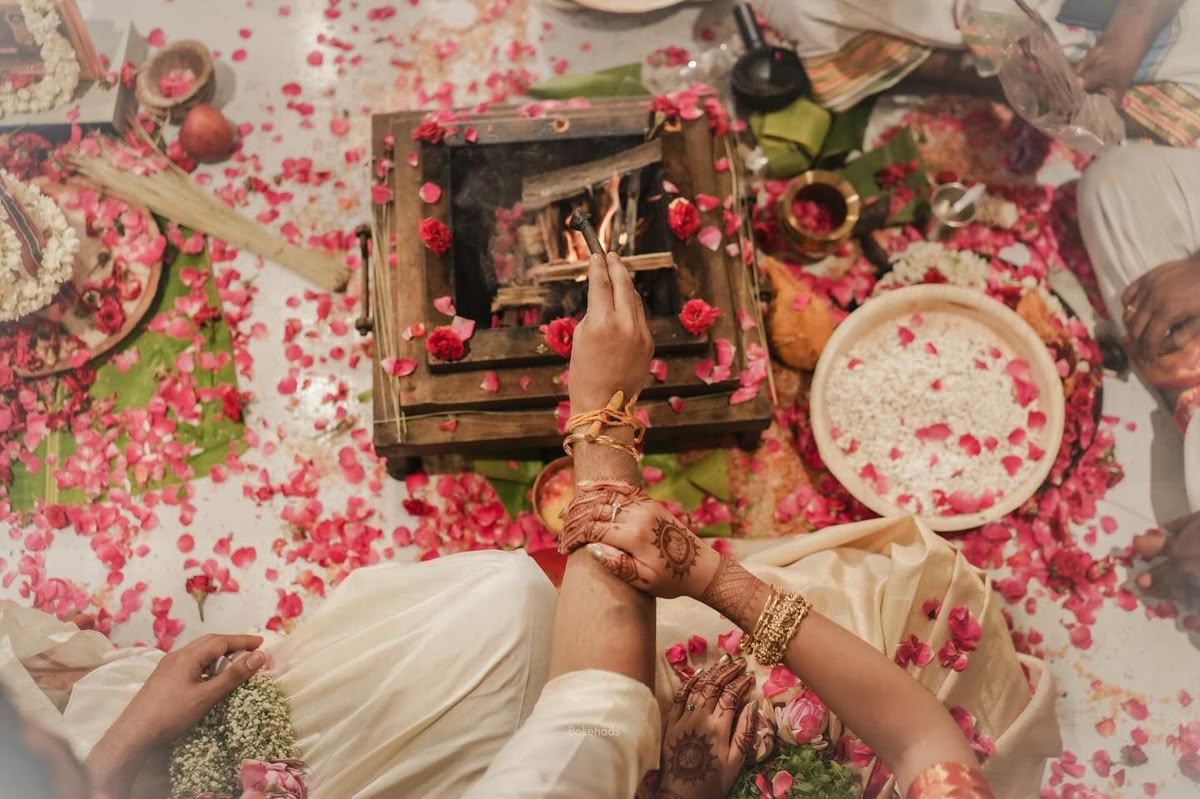
Tamil ceremonies almost always include a homam. This means open flame, smoke, heat, and a fire pit that must be safely accommodated. Many venues think they allow fire until they see the size of an actual homam. Ask:
• Do you allow an open-flame homam indoors? (Provide the size)
• Do we need a fire officer, mat, or ventilation?
• What happens if fire alarms go off?
If the venue hesitates, consider whether this is the right venue for you. You don’t want to have the venue breathing down your neck on your special day.
Tamil mandaps are rarely small. Between the priest, couple, parents, fire pit, stools, photography team, and ritual trays, you need real space. Minimum guideline: 3.6m x 3.6m mandap area, plus 1 to 1.5m clearance around it. Check ceiling height, load-in access, and whether the mandap can stay for photos.
Early morning ceremonies can get hot, and hotel AC often isn’t switched on early enough. Outdoor venues heat up by 10am. You need AC on 1–2 hours before guests arrive, airflow that can handle the homam’s heat, and shaded areas for elders. If it’s outdoors, it needs to be somewhere that has airflow or where fans can be installed. If the venue feels warm during your visit, it will be much worse with large groups of people inside.
Tamil ceremonies involve long sitting periods. Temples have plenty of seating but non temple weddings might not. Ensure:
• Comfortable chairs for elders
• Space for optional floor seating
• Aisle space for movement and blessings
If the ceremony is outdoors, is the seating in an area where guests are going to be under direct sun? This can cause your guests to be uncomfortable and less likely to want to stay seated.
If acoustics in the space are not good, no one can hear what your priest is saying. Ask:
· Are mics allowed?
· Does the venue have built-in AV?
· Are there sound restrictions?
Your ceremony should feel sacred, not chaotic.
Mandap teams often need 2–4 hours to set up. For an 8:30am ceremony, vendors must load in by 4–6am. Many venues don’t allow early access. Ask:
• What is the earliest load-in time?
• Is there a loading bay?
• Who is the point of contact for coming in that early?
If load-in starts at 8am, the venue is not suitable for a morning Tamil ceremony.
Morning ceremonies have harsh sunlight that can ruin photos. Indoor venues often rely on yellow downlights. Check:
• Natural light angles
• Whether lights can be adjusted
• Space behind/around the mandap for photographers
Your thali-tying moment deserves clean, flattering light.
Some venues only allow in-house catering. Clarify:
• What are the menu options?
• Can we bring outside Indian caterers? Is there an extra fee?
• Does the venue require caterers to be halal-certified?
• Are there vegetarian-only rules?
• Can caterers use the pantry or is it off limit? – this affects plating, water access, tea/coffee service, cleaning.
Tamil ceremonies are not static. People are constantly moving, photographers circle the mandap, elders come forward for blessings, families need space for trays, coconuts, flowers and offerings.
Your venue should comfortably allow:
• A clear aisle for the entrances
• Room for parents to sit close enough to participate properly
• Enough space around the mandap for photographers to move without blocking anyone
Cramped venues make the ceremony feel chaotic and visually messy. Choose a venue where movement feels comfortable.
Tamil ceremonies are mostly barefoot around the mandap for the rituals. But most modern venues don’t consider this at all.
When viewing the space, check:
• Is the flooring safe and not slipper?
• Is the floor too cold (early morning AC + marble = freezing)?
• Is the floor too hot (outdoor venues with sun exposure)?
• Is there a clean, dedicated area for guests to leave shoes?
• Will cleaners sweep/mop the mandap area before the ceremony?
• Are there any sharp edges, uneven surfaces, or metal tracks near the mandap?
This is about safety, especially for elders who may be walking barefoot for long periods of time.
Choosing a non-temple venue is absolutely possible, but only if the venue respects the needs of the rituals and the couple.
Planning your Tamil wedding ceremony venue? Let’s create a space that honors your traditions while giving you the flexibility to design your perfect day.
Let's talk about what you don't have to carry and how we can help hold it for you.